๏ Spring Hill KS, 66083
Six weeks into the campaign, the report says it is optimizing. Your phone rang more this month, or it did not, and nobody in the building can say which of those calls came from the ads.
An ad account can only optimize toward the number it is given. That is the whole job: verify the number before the first dollar, and verify it again every month. I am certified in Google Ads AI-Powered Performance, and two accounts I ran were optimizing toward the wrong number when I got them. The record is on this site. This page is about that, for businesses in the Kansas City metro: Spring Hill, Olathe, Overland Park and the neighborhoods between.
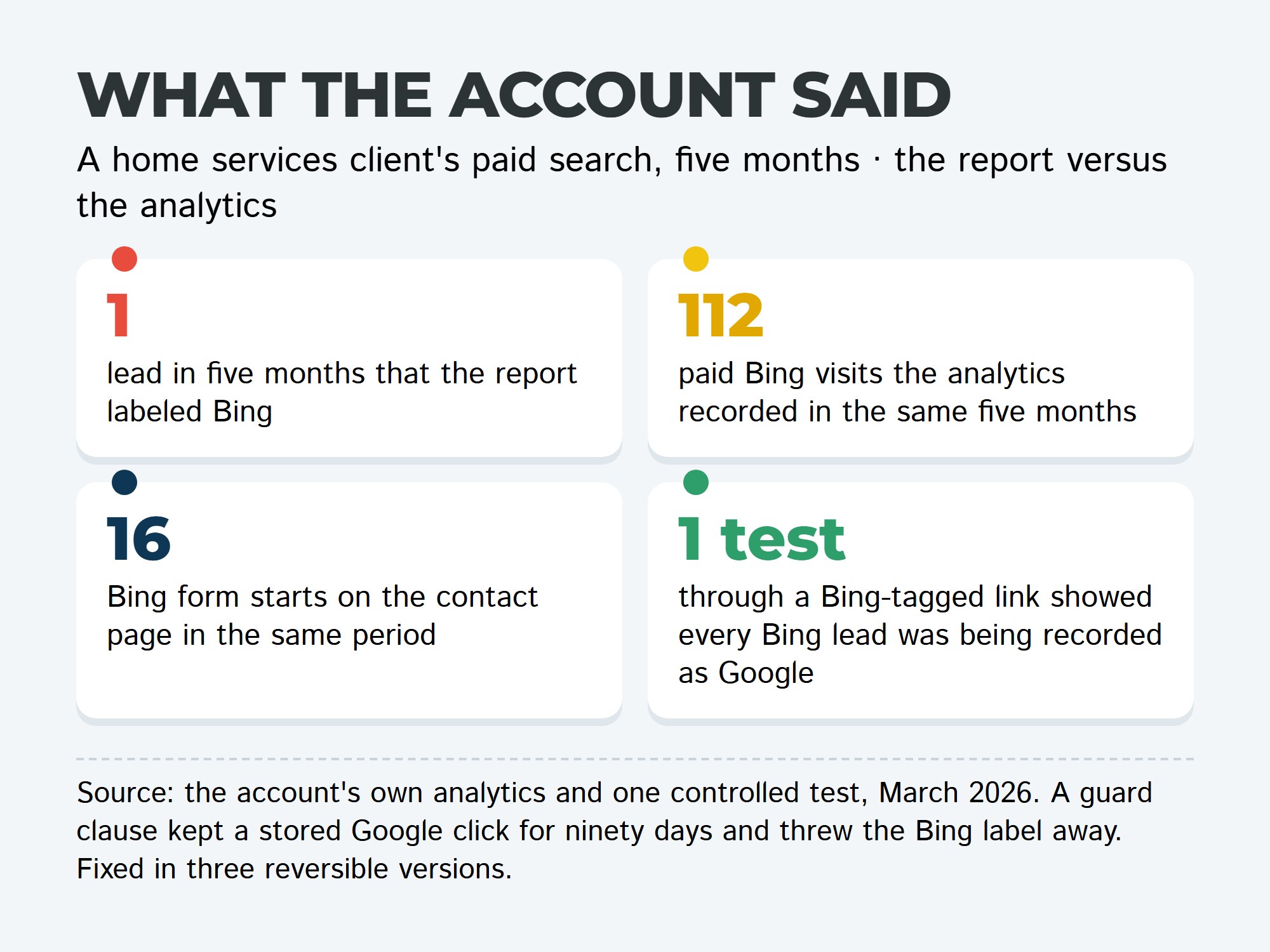
A home services client had been paying for Bing ads for five months. The reports said Bing produced almost nothing: one lead in five months carried a Bing source. In the same period, the analytics recorded 112 paid Bing visits and 16 Bing form starts on the contact page. Both numbers could not be true.
They were not. A guard clause in the tracking, live since March 9, kept a stored Google click for ninety days and threw away every Bing arrival that came after it. Every Bing lead was being recorded as Google. One deliberate test through a Bing-tagged link showed it. The fix made the newest tagged arrival win, shipped as three separately reversible versions.
Attribution is not a report you read. It is a claim you test. Every account I run gets that test before the budget moves.
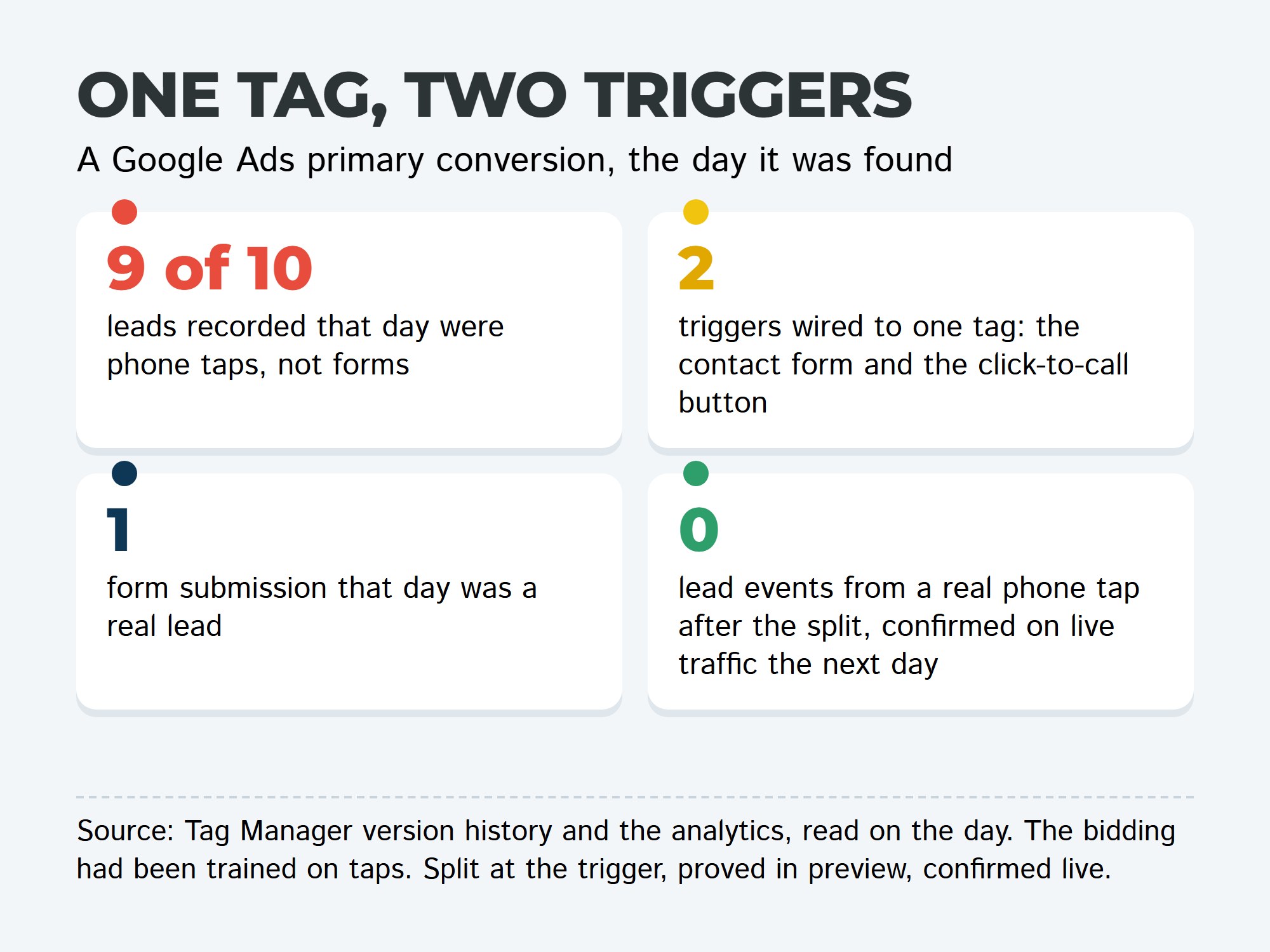
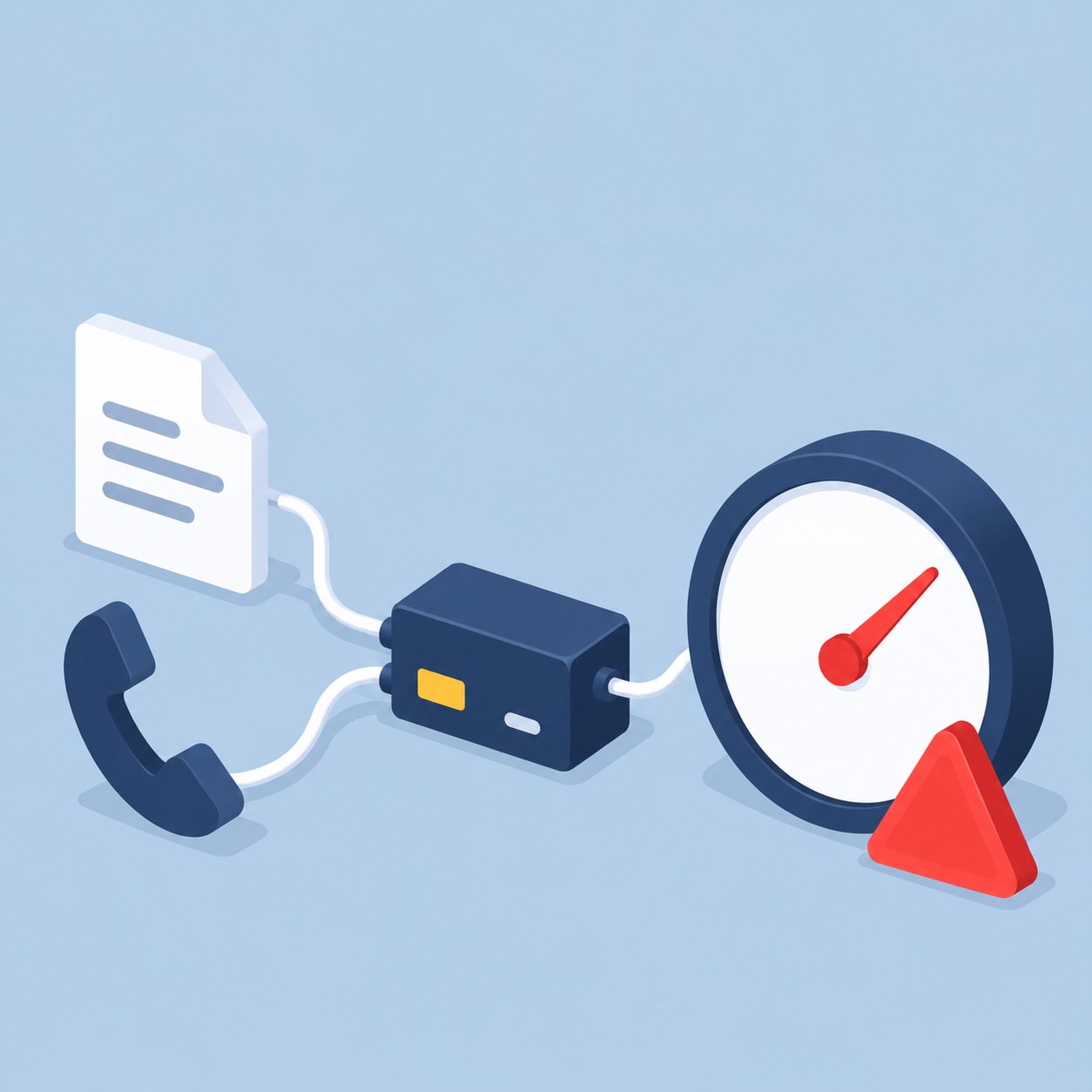
The second record is smaller and cost more. One conversion tag was wired to two triggers: the contact form and the click-to-call button. Both wrote the same event, and that event was the primary conversion Google Ads was bidding on. On the day I found it, 9 of the 10 leads recorded that day were phone taps. The bidding had been trained on taps.
I split the triggers, proved the split in Tag Manager preview on the live site, and confirmed it on real traffic the next day: a real phone tap produced a call event and no lead event. An account I took over later carried 34 conversion actions, five of them duplicates of one call event, every one valued at one dollar. Cleaning that came before any bid changed.
Why a wrong number trains the bidding wrong is its own article: Running ads with broken tracking.
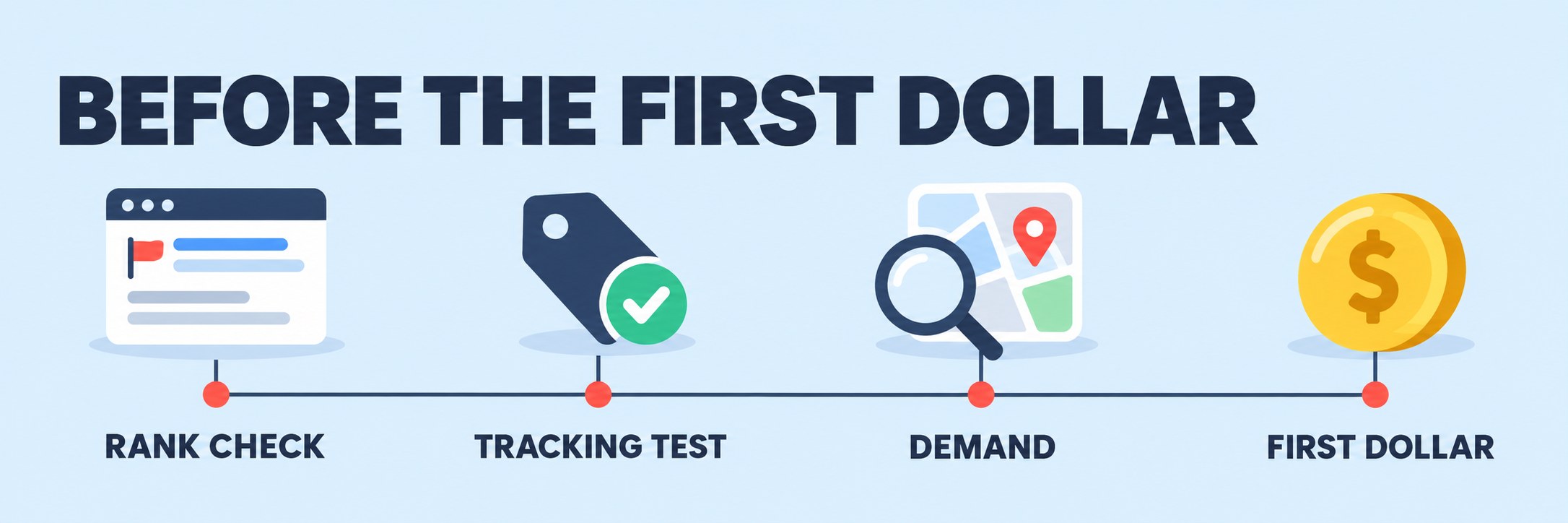
Your site cannot earn its own traffic
If your site cannot earn its own traffic, ads are the expensive way to find out. Quality Score is relevance, and relevance is built on the page, not in the account. Rank for what you sell first: search engine optimization.
Your tracking is wrong
A campaign optimizes toward whatever it is told is a conversion. If the number is wrong, more budget makes it wrong faster. The tracking gets fixed and tested first, and I will say so before quoting anything.
There is no demand where you are
The usual reason a budget cannot be spent is that there was never that much demand in your area. Whether the money can be spent where you are is a number, and the Google Ads Budget Calculator gives it to you in a minute.
The honest answer for all three is to spend the money somewhere else first. Ask me and I will say so.
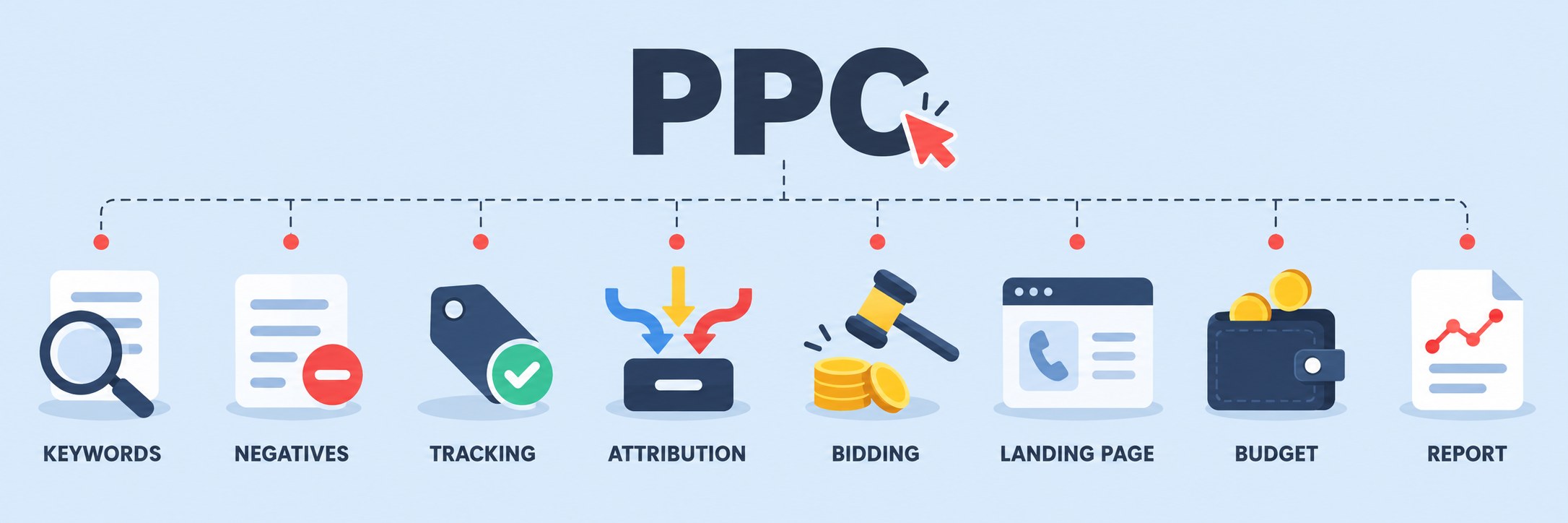
Search campaigns first, built by service, with phrase and exact match ad groups, a negative keyword list from day one, and Kansas City as the geography. Display and retargeting come later, and only if search converts.
One tag, one trigger, one meaning. Every conversion action is tested with a real submission and a real tap before the campaign goes live, and the primary conversion is the one you would pay for.
Bing, Google, organic and direct each keep their own label, tested with tagged arrivals, so the monthly report says which channel sent the call instead of guessing.
A two hundred dollar call and a fifteen thousand dollar job must not count the same. Values go on conversions before any automated bidding is switched on, so the account learns to find the jobs that pay.
The ad promises one thing and the page delivers that thing, with the phone number and the form above the fold. Quality Score is relevance, and relevance is the cheapest bid reduction there is.
Calls, forms, cost per lead by campaign, the search terms that spent money, and what changed. Changes happen on a schedule, not on a mood, and the report fits on one page you can read in a minute.
Ready for ads? Three questions.
1. When you search for what you sell, without your business name, are you on the first page?
2. Has anyone tested that a form submission and a phone tap are counted as two different things?
3. Do you know how many people search for your service in your area each month?
Nothing you click here is sent anywhere. It runs on this page only.
Three questions, twenty seconds. If the answer is no, this page just saved you a budget.
The fee is quoted after I read your account, or your market if there is no account yet, because the work in the first month depends on what the tracking looks like. The ad budget itself is a separate number, and it is yours.
Google has no minimum. Your market does. Whether the money can be spent where you are is a number, and the Google Ads Budget Calculator gives it to you in a minute.
Rank for what you sell first. Quality Score rewards a page that already answers the search, so a site that earns its own traffic pays less per click when it advertises. If the site cannot earn its own traffic, ads are the expensive way to find out.
Because the tracking was tested, not assumed. The home services record above is what an untested account looks like: every Bing lead labeled Google for five months. Every account I run gets a tagged-arrival test before the budget moves and a read of the labels every month.
Only after search converts and the tracking has been verified. Display and retargeting spend money on people who did not search for you, so they come second, and they get the same tested conversion setup before a dollar moves. The people who already bought from you are an email marketing list, not an audience to pay for again.

Contact Us