๏ Spring Hill KS, 66083
The newsletter goes out on the first of the month because it always has. Nobody in the shop can name a customer it brought in, the platform bill went up again in October, and one man has now asked twice to be taken off the list.
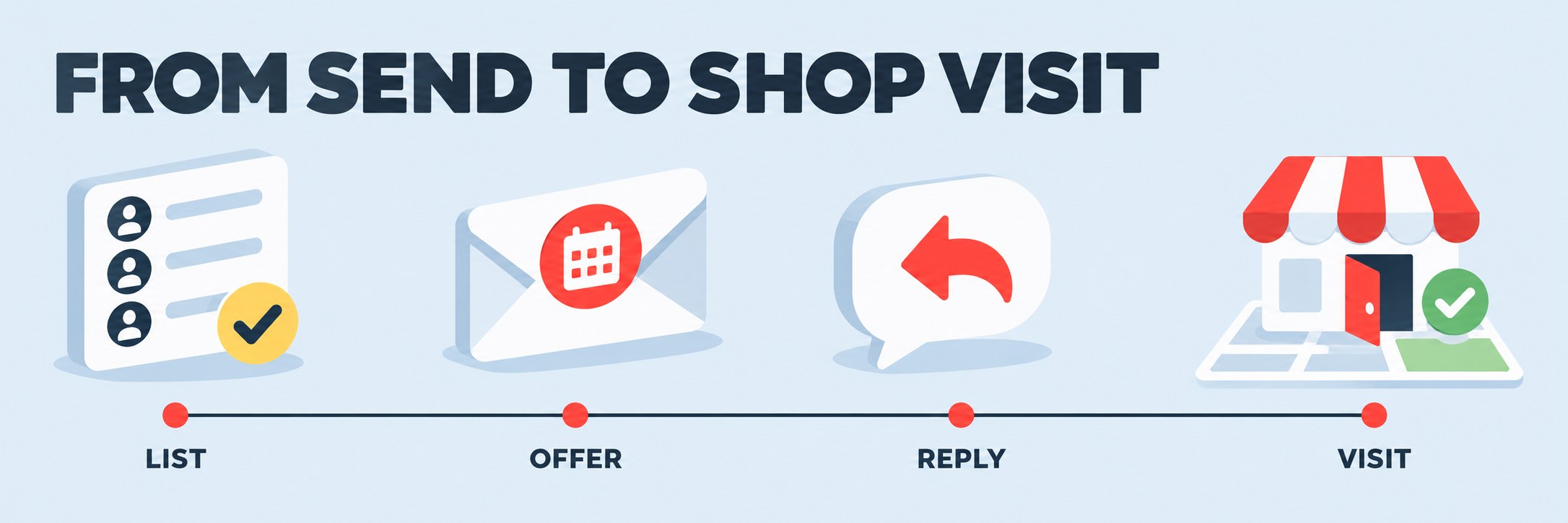
An email earns a reply or a visit when it carries an offer with a date, goes to a list that is yours and is kept in one place, and lands in an inbox somebody answers. One dealer's two winters are on this page, because that is what the same list did with an offer and without one. For businesses in the Kansas City metro: Spring Hill, Olathe, Overland Park and the neighborhoods between.
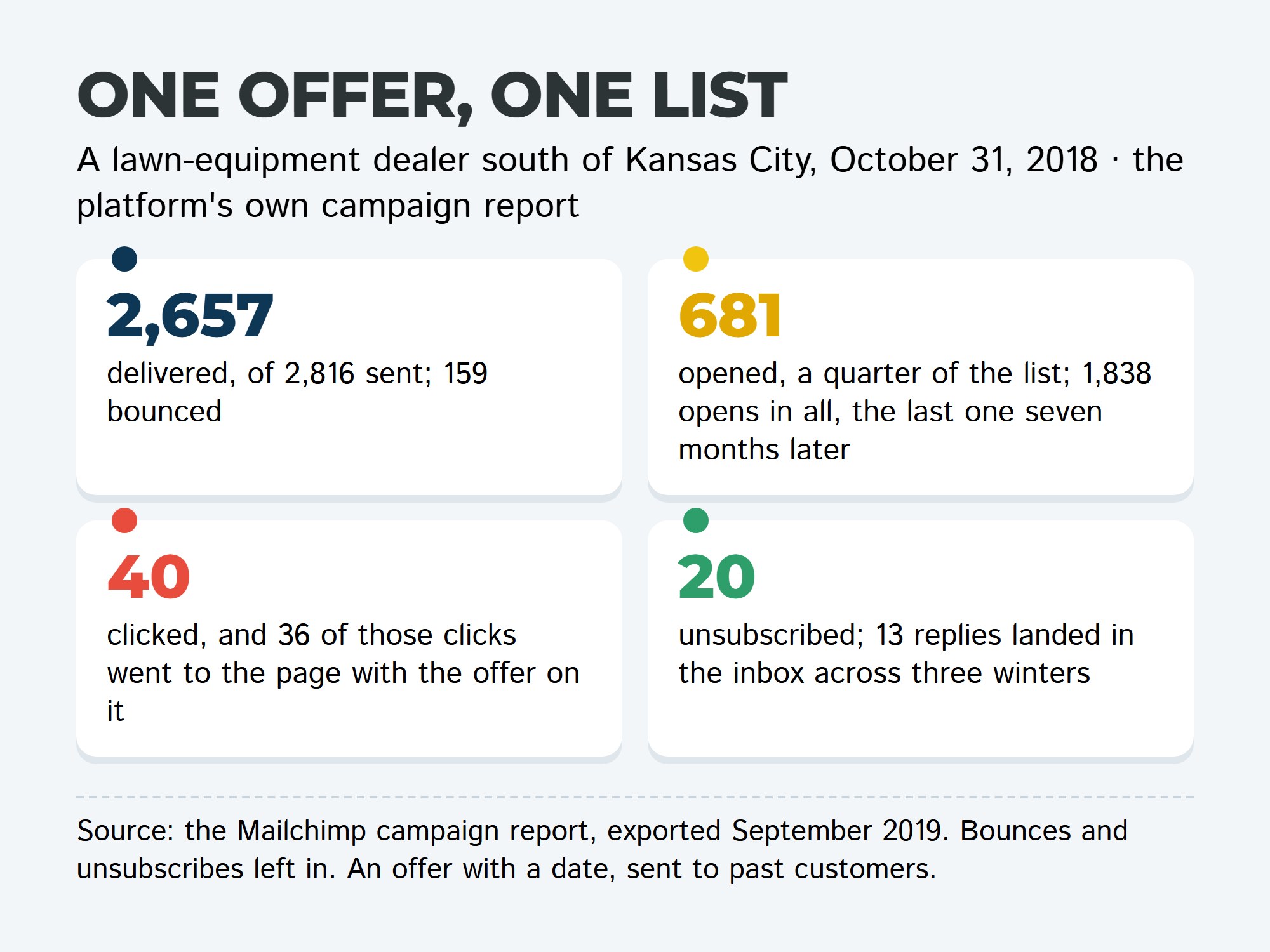
On October 31, 2018, a lawn-equipment dealer south of Kansas City sent its winter maintenance offer to 2,816 addresses. 2,657 were delivered and 159 bounced, which means the address's own mail system, the computer that receives its email, refused them. 681 people opened it, which is a quarter of the list. 40 clicked, and 36 of those clicks went to the page with the offer on it. 20 people unsubscribed. The last open came seven months later, at the end of May.
Those are the platform's own numbers, exported the following September, with the bounces and the unsubscribes left in. I would rather show them than promise you a rate.
The number the report does not carry is the one the shop felt. Thirteen replies landed in the inbox across three winters, from people who hit reply on the offer and asked a question. The owner answered one from the thread: "Yes we are repairing snowblowers. You are not alone, many aren't starting this year. Just bring it in when you can." That reply is the conversion. Nobody counts it, and it is why the send goes from an address a human reads.
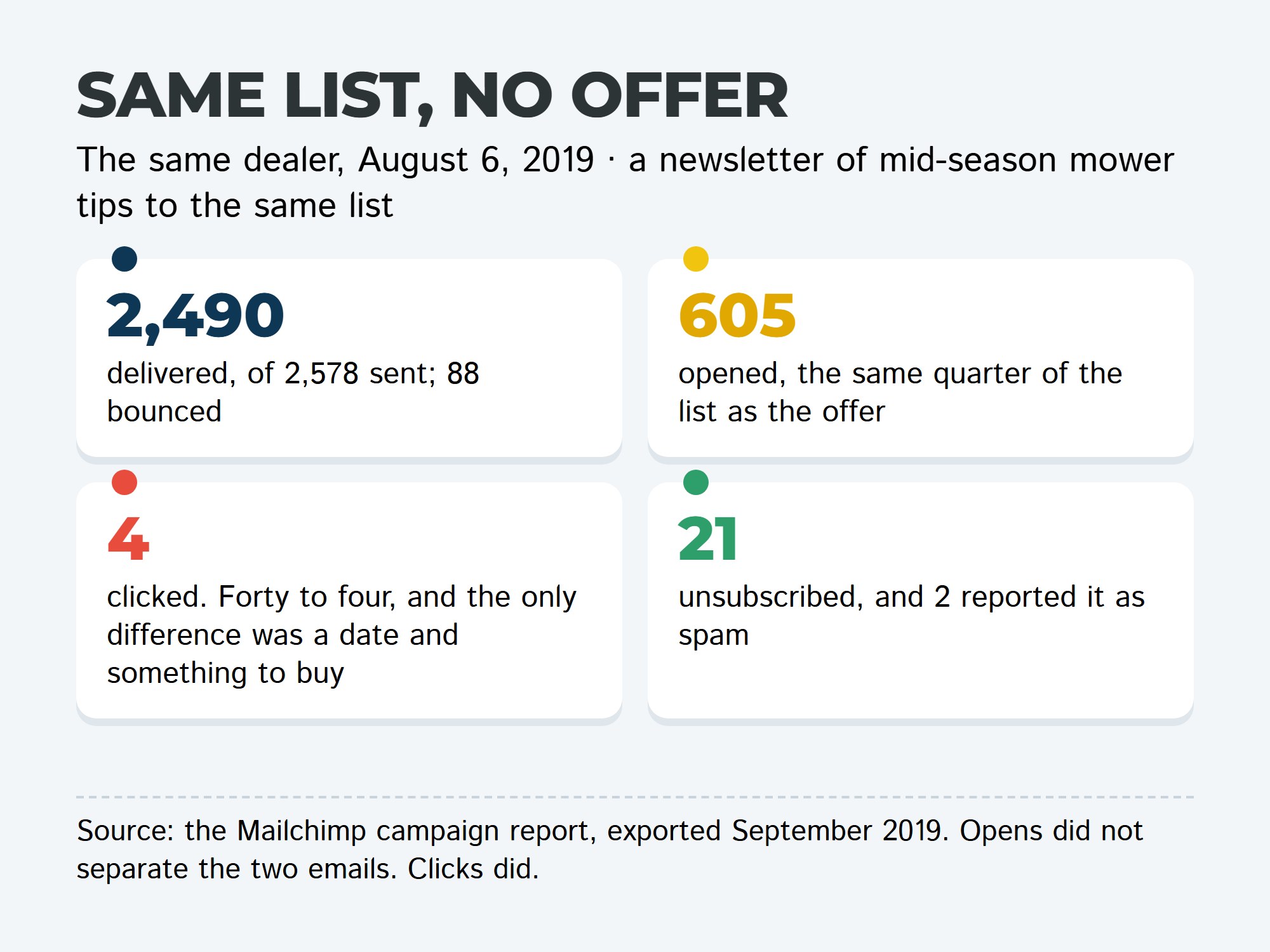
The next August the same list got a newsletter of mid-season mower tips. 2,578 sent, 2,490 delivered, 605 opened. Nearly the same quarter of the list opened it. 4 people clicked. 21 unsubscribed and 2 reported it as spam. Opens did not separate the two emails. Clicks did, forty to four, and the only difference between them was a date and something to buy.
The list itself was a bill. It was rebuilt from the accounting software every fall and merged into the platform, and three falls in a row the import pushed the account into a higher tier. The owner cut 1,173 names one year and asked, reasonably, whether the monthly charge could come down. It could, and dead addresses cost the same as live ones until somebody removes them.
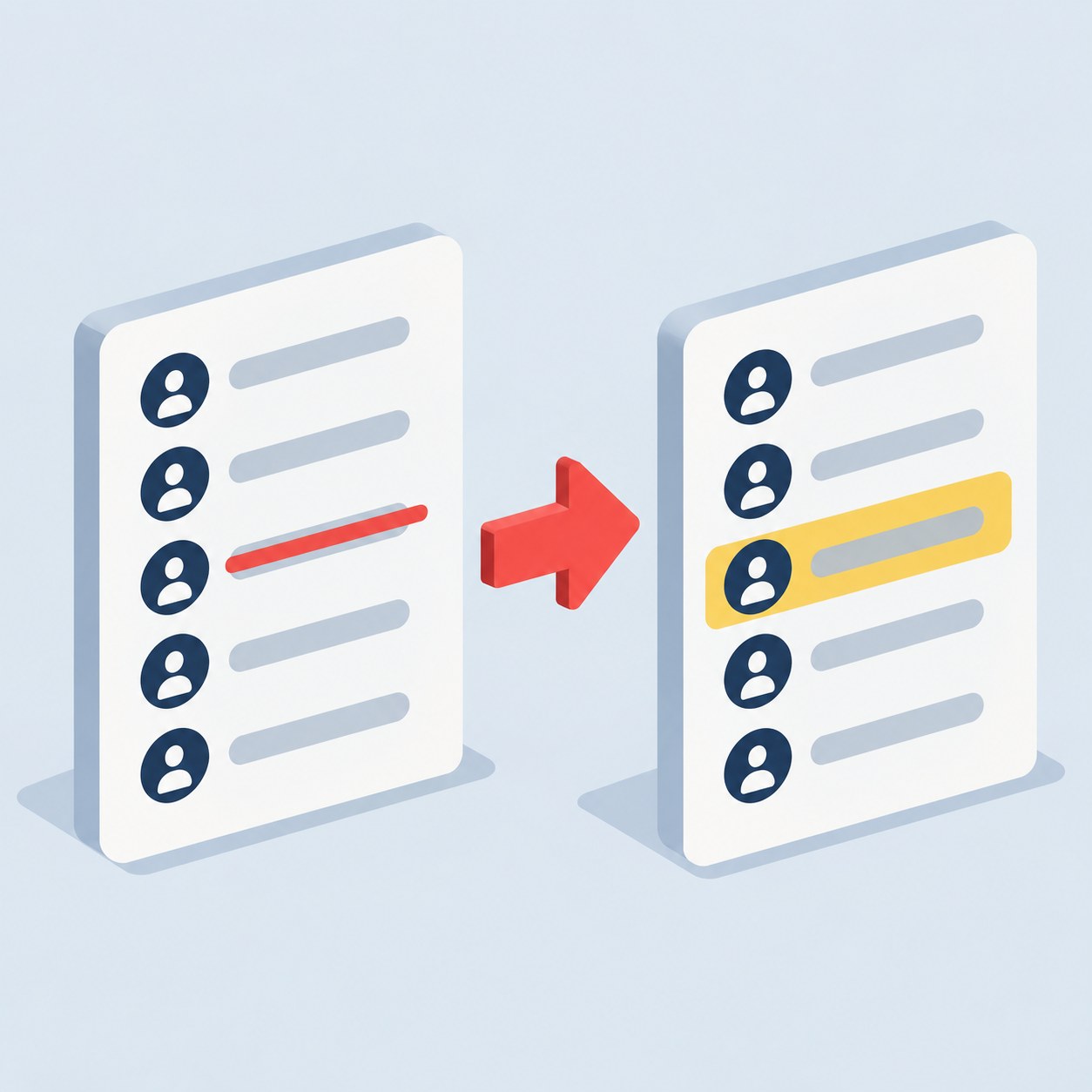
The merge had a second cost. A name the owner crossed off her spreadsheet by hand came back with the next import, and one customer asked twice to be removed. In her words, "It was sent anyway." An unsubscribe is a promise the sender keeps, and it can only be kept in one place, so the platform's audience is the list of record and nothing else is.
There is no offer with a date
A newsletter is a habit, not a reason. The same quarter of the list opened both emails; the one with a deadline got forty clicks and the one without got four. If there is nothing to say by a date, there is nothing to send this month.
The list is not yours, or has gone cold
Reaching people who have never heard of you is what PPC advertising is for; email is for the people who already gave you an address. A bought list, or one that has not heard from you in a year, gets a short re-introduction first, and the ones who do not open it come off.
Nobody answers the reply
Thirteen people hit reply on one dealer's offers. If the reply lands in an inbox nobody owns that week, read the lead handoff nobody owns first; the email can wait a week, the reply cannot.
The honest answer for all three is to spend the money somewhere else first. Ask me and I will say so.
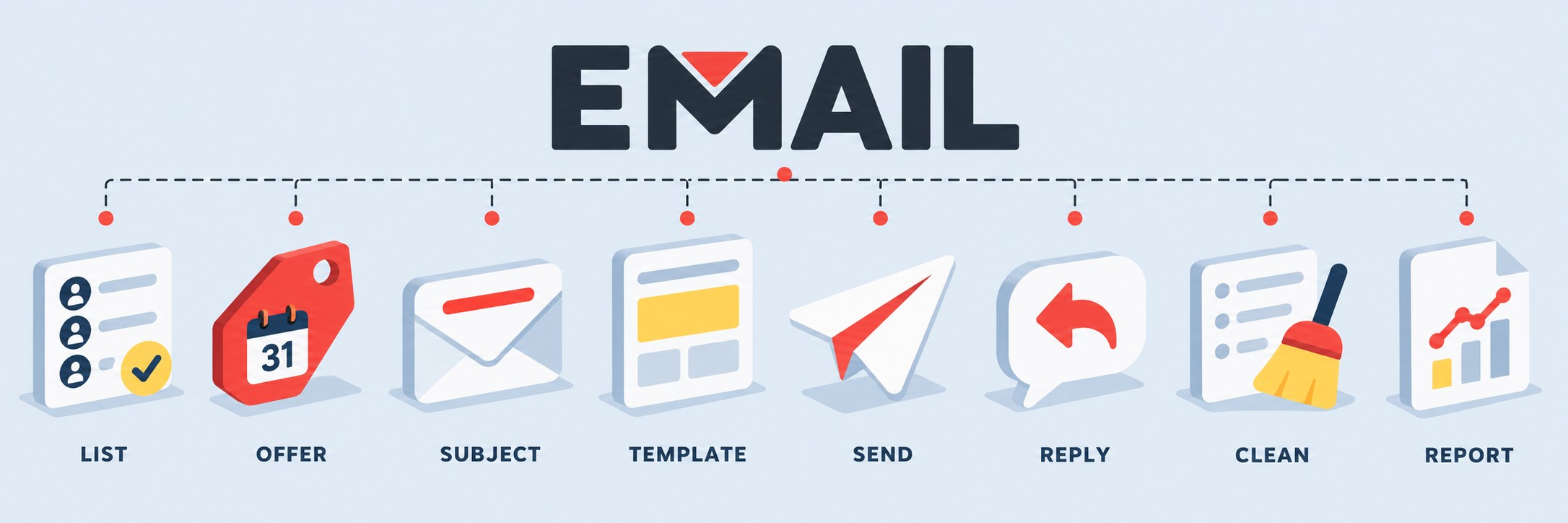
One audience on the platform, imported once from your customer records and kept there. Hard bounces and unsubscribes come off the same day, the ones who never open come off each season, and the bill follows the list down.
One offer, three sends: a first chance, a second chance and a last chance, with a date on every one. The subject lines are agreed with you in writing before the first goes out, and the series is the calendar, not the first of the month.
A person who gives you an address gets one email the same day saying what to expect, and a second one after the season's offer if they opened and did not click. Two messages, written once, sent by the platform without anyone remembering to.
One template built to your site's type and colors, with the offer block as the only thing that changes each send, so a new campaign is an hour and not an afternoon. Every send carries a plain-text version for the inboxes that strip the design.
Sent from your shop's address, at the hour your list opens, with the reply-to pointed at the person who will answer that week. Replies are the conversion nobody reports, so they are read, answered and counted.
Delivered, opened, clicked, unsubscribed, replied, and what the offer page did afterwards, on one page with a decision in it: what goes out next, and who comes off the list.
Ready to send? Three questions.
1. Is there an offer with a date on it, something a customer can act on before a day you can name?
2. Is the list made of people who gave you their address, and have they heard from you in the last year?
3. Can you name the person who will answer a reply within a day of the send?
Nothing you click here is sent anywhere. It runs on this page only.
Three questions, twenty seconds. If the answer is no, this page just saved you a send.
Email campaigns are part of the plans on the pricing page, and a seasonal series on its own is quoted after I read your list and your last three sends. The platform charges by list size, so the first job is usually taking dead addresses off it, which lowers that bill before mine starts.
When there is an offer with a date, and not otherwise. For most Kansas City businesses that is two or three seasonal series a year, each three sends, plus the welcome email that goes out on its own. A month with no offer is a month with no email. If there is something worth saying and no date on it, that is an article, and the content marketing page is where it goes.
About a quarter of a list of past customers opens, and on the two records on this page the offer and the newsletter opened almost identically. Opens did not tell them apart. Clicks did, and replies did. I report opens because the platform does, and I decide on clicks and replies.
Your old customer list, yes, after one short re-introduction email and a cull of the addresses that bounce or never open. A bought list, no. The addresses did not ask to hear from you, the platform will suspend the account when they report it, and the two spam complaints on this page came from people who had actually done business with the shop.
I build the template, write the offer and the subject lines with you, load and clean the list, schedule the send and read the report. You approve every send from a test email before it goes, the way the dealer's owner did every winter, and you answer the replies, because the customer is asking you.

Contact Us