Spring Hill KS, 66083

- Home
- > Blog Main Page
- > Analytics & Tracking
- > The lead handoff nobody owns: why website inquiries vanish
The lead handoff nobody owns: why website inquiries vanish
08.09.2026
DoveWebConsulting

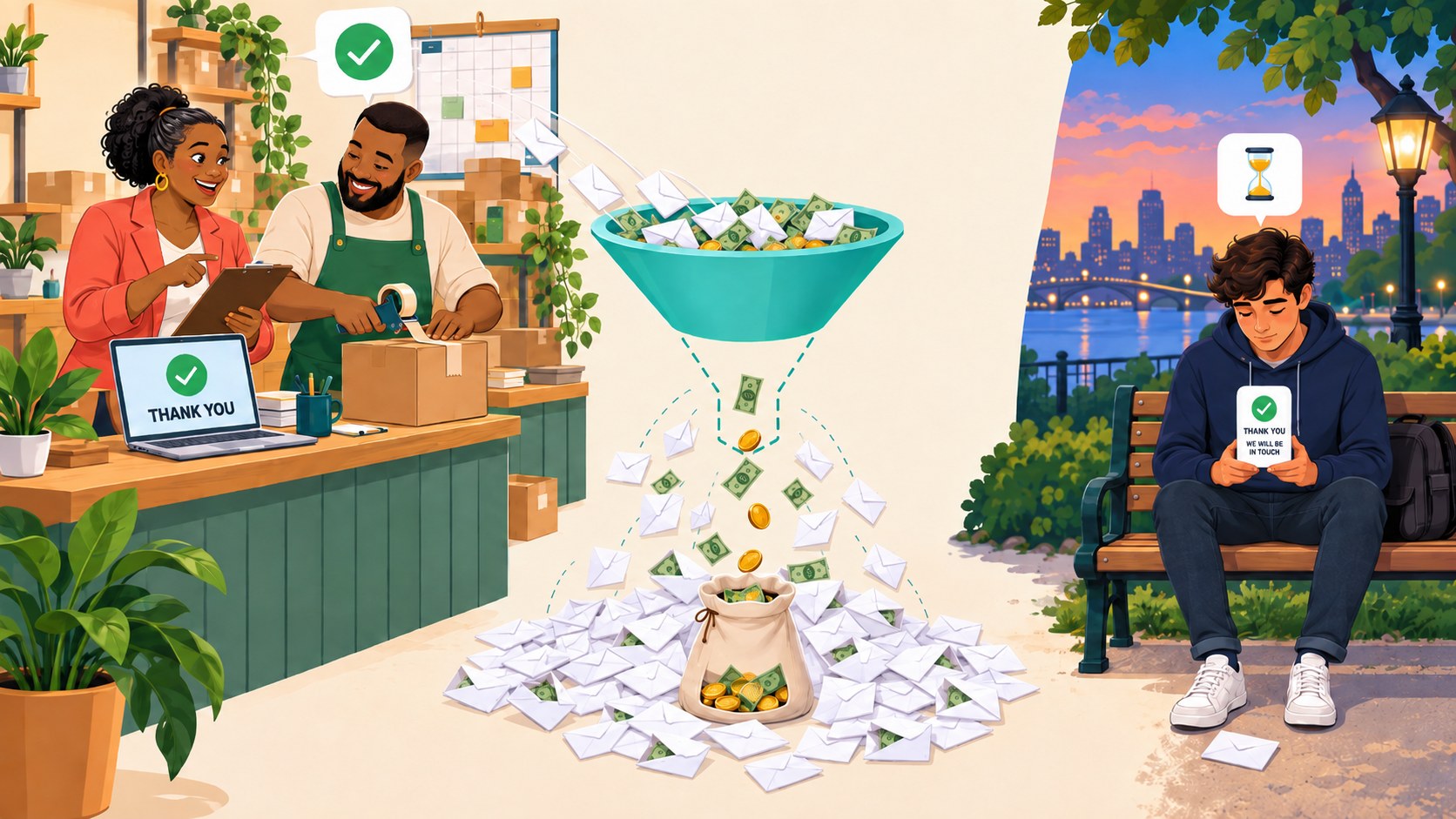
Nothing in this picture is broken. The form worked, the offer was made, and the spot where someone should have stood to take it is simply empty.
Leads do not die inside a stage. They die at the connection between two stages, and the reason you cannot see it is that every instrument on both sides reports a success. The form submits, the thank-you page loads, and the dashboard counts it. Nothing arrives anywhere a human will look. If you want the short version: submit your own form today and watch what happens next, because that is the only test that crosses the connection.
A note before we startI am going to use the industry’s own words in this article, and I am going to name every one of them as I go. There are seven. They are collected at the bottom in plain English, and each one is linked the first time it appears.If one of these words has ever made you feel slow, that is the word doing its job, not you.
I read a client's site over one afternoon. Eleven pages, analytics installed and firing, a social pixel installed and firing, and zero conversion events recorded on any of them. Their main content offer sat on sixteen pages and posted to an endpoint, which is their word for the address a form sends to, and that address no longer delivered anywhere. I filled in the form myself to be sure, and nothing came out the other side.
Why does a broken lead form go unnoticed?
This part isn't your fault. Nobody ignored a warning, because there was no warning to ignore. A form that posts nowhere still renders, still validates, still shows the visitor a thank-you. Analytics still records the thank-you page view and counts it as a conversion, correctly, because a page really did load.
Every instrument was answering a question slightly to the left of the one that mattered. They were asked, "did the page work?" and they said yes. Nobody asked, "did anything arrive?" because no dashboard on the market has that button.
What does your dashboard report, and what do you actually see?
These connections break quietly, so a report full of green will tell you the inquiries are fine in the same week that nobody rings.

Every instrument on the wall says yes. Each one answers a question about the inside of the building.
| What the software REPORTS | What you actually see |
|---|---|
| The form builder says the form was submitted successfully. | No new inquiry in the inbox. |
| Analytics records a conversion. | A quiet week when the phone doesn't ring. |
| The thank-you page loads every single time. | A customer who thinks you ignored them and goes somewhere else. |
What is a website lead handoff, and why is it different from a stage?
Think of it as a relay. Every runner is fast, and every runner has trained, yet the race is still lost in the two seconds when the baton changes hands. Nobody is coached on that moment because it belongs to neither runner.
A lead passes through four hands before a person replies:
- Google Search or an ad to the page. Visible when it breaks, because a dead page is loud.
- Page to the form script. Often silent, because the form keeps rendering after the form script behind it stops working.
- Form, to the inbox or the CRM. Almost never owned. This is the connection in the story above.
- Inbox, to a human reply. Owned in everybody's head and written down nowhere.
A stage that fails is visible. A failed connection is silent, and silence looks exactly like a quiet week for inquiries.
This is measurable, and somebody has measured it. In 2025, Hennessey Digital submitted real inquiries through the lead form on 1,333 law firm websites, using a fictitious name and story, and recorded what came back. Twenty-six percent never responded at all. The median reply among the rest took thirteen minutes, so this industry isn't slow. It is an industry where a quarter of the inquiries land somewhere nobody is standing.
It is not one profession either. In March 2024, RevenueHero ran the same shape of test against 1,000 business software companies, requesting a demo as an ordinary buyer would. Sixty-three and a half percent never replied. Two different industries, two different research teams, two different years, and the same hole in the same place.
| Who was measured | How many | Never Replied | Who measured, and when |
|---|---|---|---|
| Personal injury law firms | 1,333 firms, 150,000 data points | 26% | Hennessey Digital, 2025 |
| Business software companies | 1,000 companies | 63.5% | RevenueHero, March 2024 |
Different industries. Different research teams. Different years. Both filled in the form and waited- the same test this article is about to hand you- and both found the same hole in the same place.
Who owns the lead connection at your business?
Write these four rows out. What hands over, what fails when it stops, and the name of the person who finds out. That name is the whole exercise, and it is the one everybody leaves off.
| The handover | What fails silently | Owner: write a name | Found out within |
|---|---|---|---|
| 1. Someone fills in your form | The form stops loading | ||
| 2. The form sends it on | The address stops accepting it | ||
| 3. It lands somewhere | Nothing arrives | ||
| 4. A person answers | Nobody replies |
The last two columns are the exercise. A name with no time beside it is a volunteer, not an owner. If you cannot fill in a row without asking somebody, that handover is already running unwatched, and the last two rows are almost always empty.
The test of an owner is not who would fix it. It is who finds out first and finds out without checking. If the answer to any row is a department, a platform, or "we would notice," that connection has no owner.
What does an unowned contact form cost?
A contact form on a client site emailed the owner. The owner forwarded it to a colleague to call. Two hops, both of them people, neither of them on a clock. It worked most of the time, which is what made it invisible. One of the inquiries that sat in that chain was worth about 1.2 million dollars.
Nothing was broken in the way a monitor understands broken. Every hop delivered. The chain just had no clock and no owner, so it moved at the speed of whoever happened to check their email.

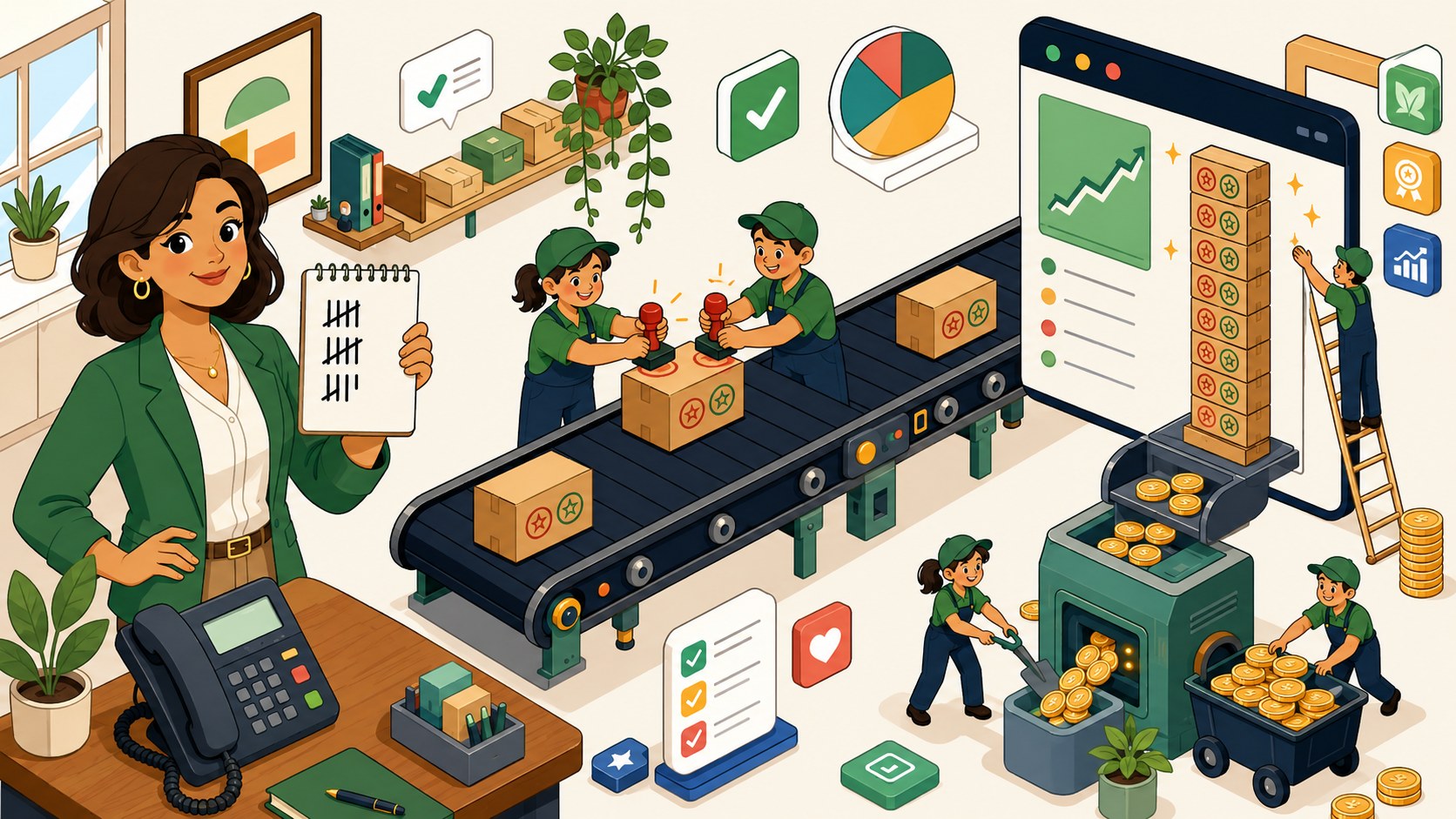
Two hops, no clock. Nobody in this picture is late, because nobody ever agreed when it was due.
What have I got wrong here myself?
I built the fix for that exact chain: a five minute warm handshake, an automatic reply that goes out the moment a form is submitted, so the inquiry is answered before anyone forwards anything. I built it, staged it, and then it sat there unshipped because nobody had decided which mailbox it should send from.
I should have asked that question on the first day, in the same breath as the brief. Instead, I treated it as a detail to settle later, and later is where these things sit. The fix was built. The connection still had no owner, so the fix did not exist.
How do I test my website forms in ten minutes?
Do not audit anything. Just be a customer.
- Fill in your own form, from your phone, on cell service rather than the office wifi.
- Start a timer. Do not tell anyone you did it.
- Wait for the first human word that reaches you, and write down how long it took.
- Then ask whoever should have replied whether they knew it had arrived.
It is like mailing a package to yourself. You do not need to understand the post office to learn that it never showed up.
What do I do about broken website inquiries in writing?
One owner per connection, written so that somebody other than you can read it. Not a team, not a platform, a name. Then give the last connection a clock, because a reply within the hour and a reply on Thursday are two different businesses, and the only way to know which one you are running is to measure the gap between the submission and the first human word.
The twenty-second version. Ask one question out loud about the last connection only: Who owns the reply? If the answer takes longer than twenty seconds, or comes back as a team, a platform, or “we would notice,” you've found the connection that's losing them.
If you'd prefer someone else to run that test, the free site analysis does the same job for you. I submit your forms, time how long a reply takes, and tell you which of the four connections is losing them.
What do these website words actually mean?
Every one of these is a word somebody has said to you without stopping to explain it. They all belong to the same picture, so here it is: your inquiry is a package. Everything below is a step in getting it delivered, and every instrument in this article confirms a step that is not the step that matters.
| The word they use | What it actually is | The picture |
|---|---|---|
| Endpoint | The address your form sends to. Not a page anybody visits, a back door the form knocks on. | The post office your package is addressed to. If it shut down last year, the mail carrier still takes the package from you. |
| Form script | The code that catches what you typed when you press send, and carries it somewhere. | The delivery driver. The package does not walk to the post office on its own. |
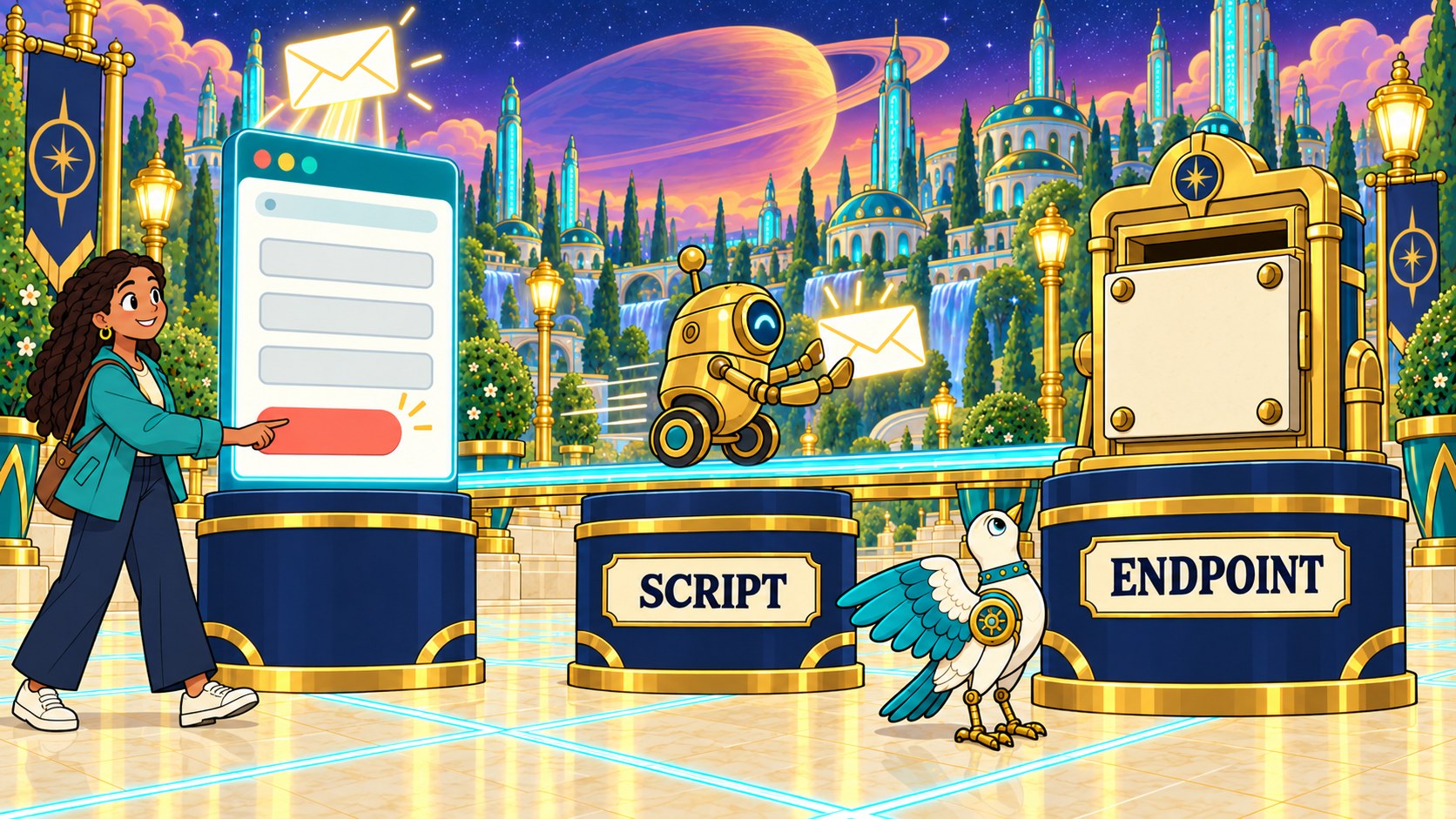
The endpoint and the form script. The form works, and the script carries the message exactly as intended. The address it was built to deliver to is the part that stopped accepting.
| The word they use | What it actually is | The picture |
|---|---|---|
| Thank-you page | The page shown to the visitor once they submit. | The receipt printed at the counter. It is printed before the package goes out. |
| Conversion event | A note your analytics writes down when something you told it to call a success happens. | A delivery confirmation. It confirms the van stopped at the address. It does not confirm anybody opened the door. |

The thank-you page, the conversion event and the SLA. Three pieces of paper that all say yes, and one envelope that has not moved since it was set down.
| The word they use | What it actually is | The picture |
|---|---|---|
| Social pixel | A few lines of code from Facebook, Instagram or LinkedIn that quietly tell that platform who visited your site, so it can show them ads later. | A doorbell camera the platform installed on your store. It records who walked past and who came in. It was never asked whether anyone bought anything, so it cannot tell you. |
| CRM | The list where inquiries are supposed to land and get a person's name against them. | The mail room. Things arrive there. Somebody still has to sign for them. |
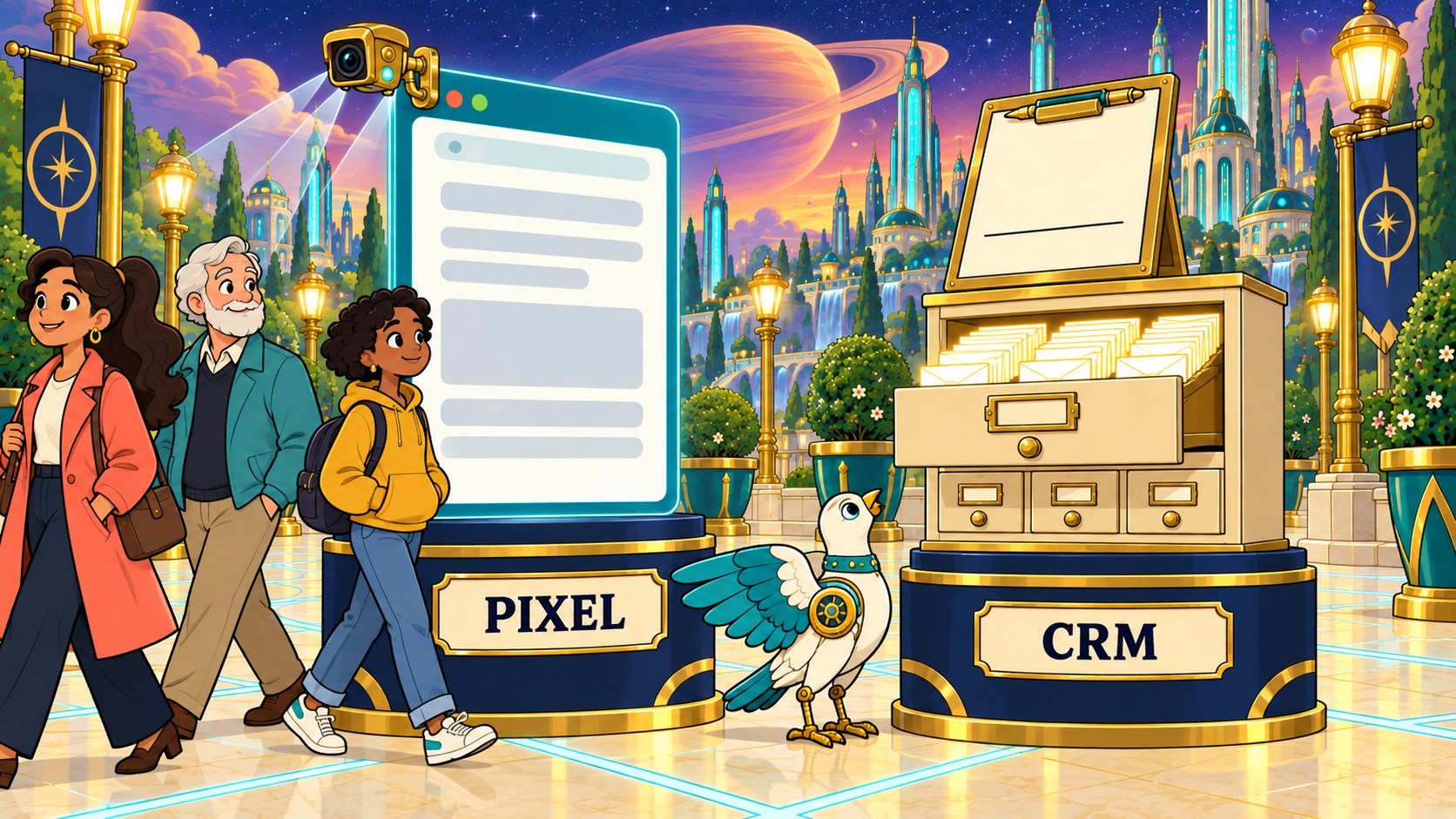
The social pixel and the CRM. The pixel is bolted to your own site and counts everyone who walks past. The CRM beside it holds everything that arrived. The line where a person signs for it is still blank.
| The word they use | What it actually is | The picture |
|---|---|---|
| SLA | A written agreement about how quickly somebody will respond once a lead is theirs. | The delivery promise on the label. It is a promise about the package that arrived. It says nothing about the one that was never picked up. |
Read them together and the article's point is already made. Six of these seven confirm that a step happened. Not one of them confirms that a person received anything.
Frequently asked questions about website inquiries
Is this the same as a marketing to sales SLA?
No, and that is the common answer to this question rather than the useful one. An SLA governs what happens after a lead has arrived in the CRM. This article is about whether it arrived at all. You can have a perfect SLA on top of a form that posts nowhere.
My analytics shows conversions, so is my connection fine?
Not necessarily. Most conversion events fire on the thank-you page, which loads whether or not the submission was delivered. That is a page-load event wearing a conversion's name. There is more on what each tool can and cannot see in Google Analytics vs Webmaster Tools: what each counts.
What if the leads really have just stopped?
Possible, and worth knowing either way. Run the ten-minute test first, because it costs nothing and it removes the only explanation you cannot see from a report. If the connection is sound, the question moves upstream to traffic and tracking, which is what broken conversion tracking does to your ad spend.
How many connections should I map?
Four is enough to start, and the fourth one is the one that pays. If you cannot yet name the stages at all, start with the hub piece: most funnels are a form and a hope, and come back to this when the stages have names.
This post focuses on one connection and stays inside it. Whether you have a funnel at all and how to count each stage belong to the hub piece linked above.